Israel's 2 Million Palestinian Voters Face a Tuesday Dilemma
With 40 new settlements planned and a National Guard expanding, many question if voting can reverse the shift in policy.
By Olivia Parker ·
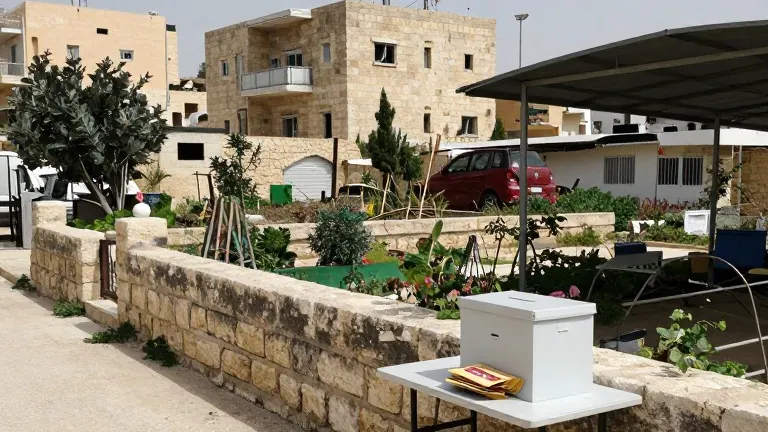
For most residents of Israel, the general election on Tuesday, October 27, is a contest between Prime Minister Benjamin Netanyahu and his opponents led by former general Gadi Eisenkot. For the 20 percent of the population that holds Palestinian citizenship, the choice looks very different.
The political center of gravity is moving rightward, bringing new pressures on Palestinian communities. Settlers are encroaching on traditional boundaries, and the state is expanding the militarization of civilian life. This creates a specific anxiety for Palestinian citizens who are deciding whether to cast a ballot at all.
Finance Minister Bezalel Smotrich recently unveiled a plan to add one million Jewish residents to the Naqab and northern Israel. The proposal includes 40 new settlements, dozens of farms, and hundreds of thousands of new housing units. The goal is to extend the model of territorial control currently used in the West Bank into areas where Palestinian populations are concentrated.
Security measures are also shifting. National Security Minister Itamar Ben-Gvir has issued 300,000 gun licenses since taking office. He is also developing a National Guard, a force inspired by the 2021 protests in towns like Lydd and Haifa. The guard is intended to suppress unrest, but its operational framework is still being defined. Meanwhile, organized crime groups have obtained advanced weapons, leading to increased violence in Palestinian neighborhoods that law enforcement has often ignored.
The United Arab List, led by Mansour Abbas, has argued that joining the anti-Netanyahu camp helps halt the far-right agenda. However, the party’s time in the 2021 coalition government offers a counter-argument. Mazen Ghnaim, a member of Ra’am, admitted in 2022 that he could not push through policies for the Palestinian population despite being in power. The coalition fell apart without delivering the promised changes.
This history suggests that supporting the opposition does not automatically translate into policy reversal. The author of the report notes that four more years of far-right rule would pose an immediate threat to community rights. Consequently, he plans to vote in Tuesday's election. He argues that while voting may slow the current project, it cannot reverse the deeper cultural and structural changes taking place in Israeli society.
The author believes Palestinian political leaders must embrace the fact that the fate of citizens within Israel is tied to the fate of Palestinians elsewhere. He calls for a more radical political response, including reforming the High Follow-Up Committee for Arab Citizens of Israel. This would involve rooting the organization more firmly in Palestinian society through popular committees and grassroots organizing rather than relying solely on parliamentary participation.
Source: Al Jazeera