Kyiv Asks Moscow to Move Abu Dhabi Talks One Week Earlier
Ukraine also wants a European representative at the table for the first session, a request Russia has resisted so far.
By Olivia Parker ·
For Ukrainians who spent last winter without reliable power, water or heating, a week of talks moved closer to the cold months carries weight. A source in President Zelenskyy's team put the point plainly: "in December, every week will be important. When you have no power, water or heating, every single day plays a role." Kyiv is asking Moscow to begin the round at least seven days before the date on the calendar, with 3 November as the earliest start.
The trilateral format brings Ukrainian, American and Russian delegations together in Abu Dhabi. A session was tentatively set for 10 November, after the US congressional midterm elections. Kyiv, working with Washington, is pressing for an earlier start. By the evening of 25 October, Moscow had not confirmed any change. Yuri Ushakov, an aide to the Russian president, has said Russia is ready to resume trilateral negotiations after 4 November.
Alongside the scheduling dispute sits a question of who sits where. Ukraine wants a European representative involved from the opening session. Russia has resisted seating Europeans at the first meeting. A source close to Kyiv's negotiation team said the Ukrainian side will bring European participants to Abu Dhabi and brief them there in real time. The source noted that no EU representative has been designated, so envoys can only receive information and hold no authority to decide anything.
Over the past two meetings, a figure has emerged for that role: Björn Seibert, Head of Cabinet to European Commission President Ursula von der Leyen. Ukraine has pushed for European participation despite opposition from Russia and, at times, the United States. Sources in Zelenskyy's diplomatic team say Jared Kushner and Steve Witkoff conveyed to Vladimir Putin the idea of discussing a new security model, and that Putin agreed to do so.
Kyiv does not expect the first session to produce an agreement. A member of Zelenskyy's team who has taken part in earlier negotiations said the composition of delegations may change, so the first meeting lets new participants get acquainted, the second turns to substantive work, and decisions could come around the third. Ukraine also wants the opening discussion to avoid allocating villages and instead address what peace will look like once the war ends, including how Ukraine would be protected and what form cooperation with NATO might take.
A source close to the negotiation team said trust in Trump within Ukraine runs 6% higher than trust in Putin, and that no one there will act on Trump's assurances alone. Davyd Arakhamiia, who leads the Servant of the People parliamentary faction, told the Americans that any final settlement must be acceptable to residents of Kharkiv and Dnipro: "After Donbas, they are next, and if the residents of these regions look at our 'peace formula' and say, 'Okay, this suits us,' then that will truly be a work in progress." Zelenskyy has said Ukraine will not accept caps on the size of its Armed Forces or neutral status in any deal.
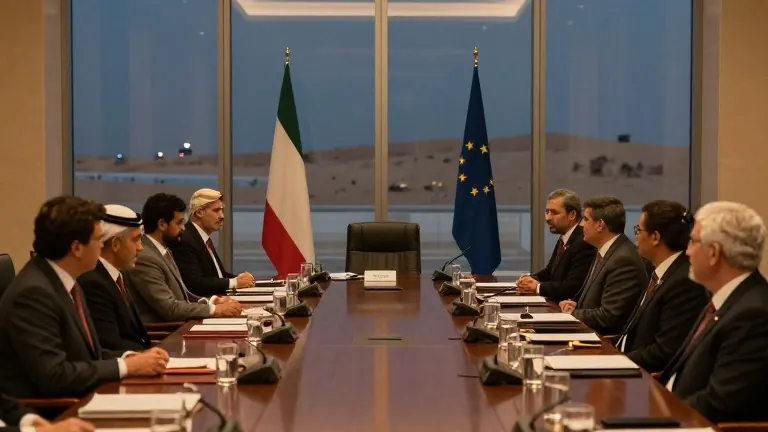
image_prompt':'A quiet diplomatic meeting room in Abu Dhabi at dusk, long polished table with water glasses and microphones, flags absent, warm lamplight against tall windows showing a darkening desert skyline, chairs arranged in facing rows, a mood of waiting before talks begin.'}
Source: Ukrainska Pravda