US envoy backs Syrian government control over Druze region
Tom Barrack’s comments suggest Washington favors Damascus authority in Suwayda over the influence of an Israeli-linked Druze leader.
By Christopher Hayes ·
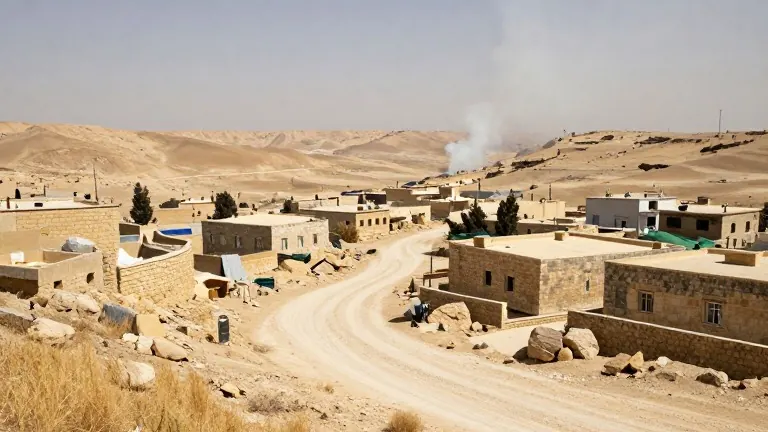
Suwayda remains a point of friction in southern Syria where the central government does not hold full control.
US special envoy Tom Barrack spoke with Australian social media personality Mario Nawfal on Friday regarding the status of the southern governorate. Barrack referred to a specific Druze sheikh, widely identified as Hikmat al-Hijri. The National Guard, an armed group linked to al-Hijri, has faced accusations of receiving support from Israel while pursuing separatist goals.
The comments signal a divergence between Washington and Jerusalem on how to manage the region. Barrack is the US ambassador to Turkiye and a special envoy for Syria and Iraq. He is known for a direct diplomatic style that sometimes bypasses traditional caution. His remarks appear to indicate that the United States prefers the Syrian government maintain control over Suwayda rather than allowing a group aligned with al-Hijri to dominate the area.
Navvar Saban, a security researcher at the Arab Center for Contemporary Syrian Studies, interpreted the envoy's words as a clear message. "Israel backing [al-Hijri] does not equal American backing," Saban stated. He added that Washington has prioritized an agreement with Damascus while Israel maintains its own security demands.
The relationship between the US and Syria has evolved since the fall of President Bashar al-Assad in December 2024. US President Donald Trump has developed a strong working relationship with Syrian President Ahmed al-Sharaa. Trump views instability in Syria as a threat to a nation attempting to rebuild after 13 years of war. Israeli Prime Minister Benjamin Netanyahu holds a different view of the new Syrian leadership.
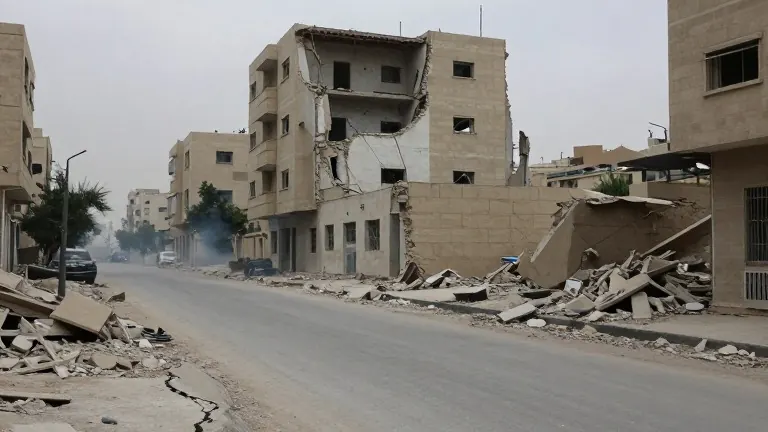
Following the collapse of the al-Assad regime, Israel seized land in Quneitra governorate and other strategic areas. The Israeli government has bombed the Syrian Ministry of Defence and arrested Syrians in the south. Syrian officials have criticized these repeated incursions. In July 2025, sectarian fighting between Bedouin tribes and Druze residents in Suwayda resulted in heavy casualties among the Druze. Israel intervened in that conflict by attacking Syrian government forces entering the province.
Nanar Hawach, a Syrian analyst who visited Suwayda in September, noted that Washington is building a partner in Damascus. Hawach argued that Israel prefers a Damascus that is too weak to assert itself in the south. "Israel appears intent on a lasting military presence in southern Syria, and it uses Suwayda as a lever against Damascus," Hawach said. He observed that Israel offers enough support to keep the province reliant on Israeli protection but too little to secure its future.
A trilateral agreement signed in Amman in September 2025 called for an independent international commission to investigate the events of July 2025. The accord stipulated that perpetrators would be brought to justice. While major fighting has paused, a deadlock persists in Suwayda. Residents report feeling pressure from Damascus in their salaries, children's exams, and access to the capital.
Hawach stated that al-Hijri's authority rises with the community's sense of threat. He noted that pressure from Damascus often strengthens the leadership it aims to weaken. "Each side points to the other’s hard line to justify its own," he said. This dynamic frames the region's future in security terms rather than addressing the needs of residents seeking a middle path.
Saban emphasized the need for credible accountability to achieve a durable settlement. The Druze community requires guarantees for movement, education, and security. Neither weakening al-Hijri nor restoring government institutions alone will rebuild trust, according to Saban. The situation in Suwayda remains in a state of stasis as both sides maintain their positions.
Source: Al Jazeera